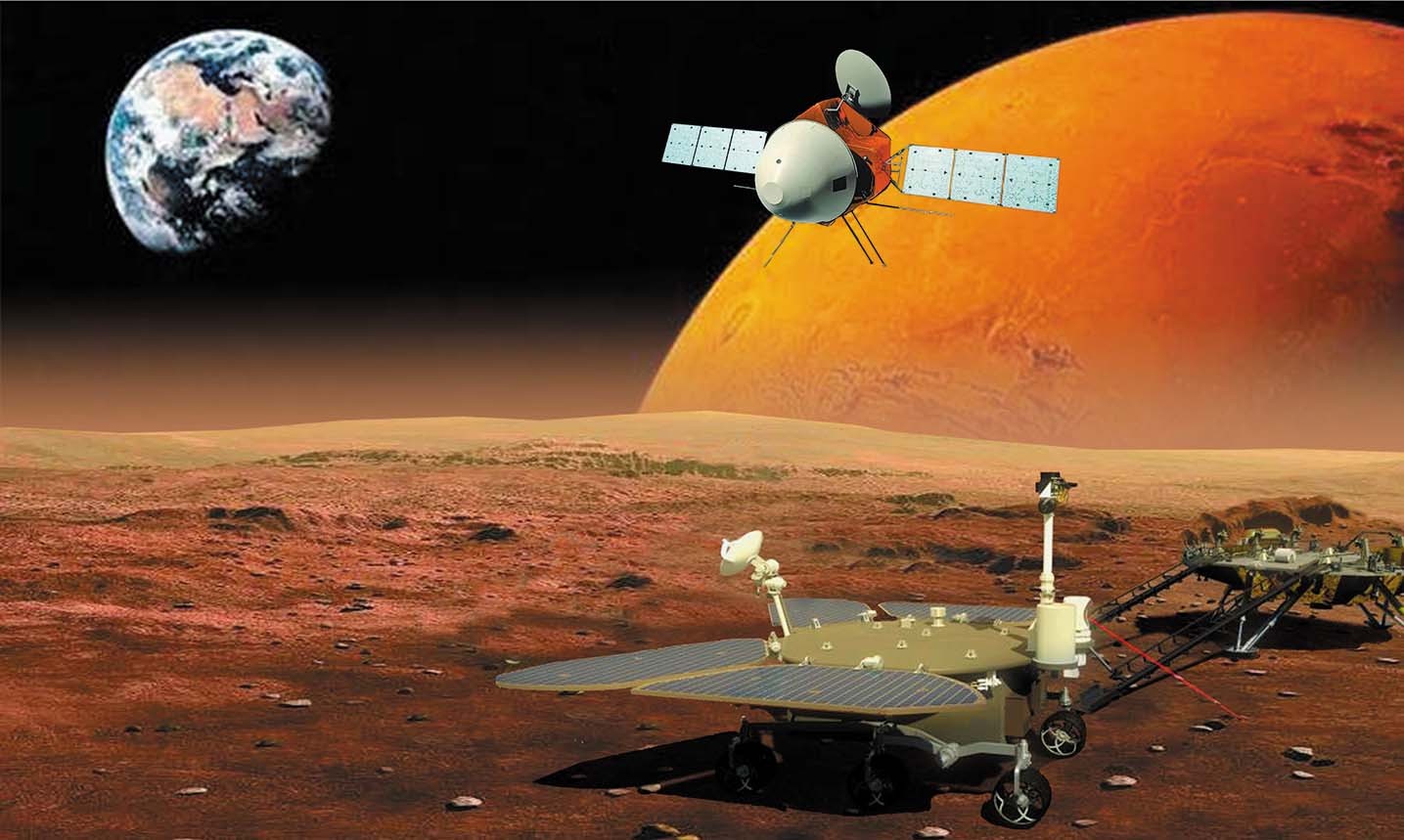
Mars missions and exploration have been a significant focus of space agencies and private companies due to Mars' potential as a target for human exploration and the search for signs of past or present life. Here are some key points about Mars missions and exploration:
1. **Robotic Missions:** Numerous robotic missions have been sent to Mars to study its atmosphere, geology, climate, and search for signs of water and life. Some notable missions include NASA's Mars rovers, such as Sojourner, Spirit, Opportunity, and Curiosity, which have provided valuable data about the planet. The European Space Agency (ESA) has also launched the Mars Express orbiter and the ExoMars mission, which includes an orbiter, a lander, and a rover.
2. **Mars Sample Return:** One of the most ambitious goals in Mars exploration is to return samples from the Martian surface to Earth for detailed analysis. NASA, in collaboration with ESA, is currently planning the Mars Sample Return mission. It involves multiple missions to collect, store, and eventually return samples to Earth, allowing scientists to study them more comprehensively using advanced laboratory techniques.
3. **NASA's Mars Missions:** NASA has been at the forefront of Mars exploration. The agency's Mars Exploration Program has sent a series of successful missions to the Red Planet. The Mars Science Laboratory mission, which includes the Curiosity rover, is designed to assess Mars' past or present habitability. The Perseverance rover, launched in 2020, aims to search for signs of ancient microbial life, collect samples for future return, and demonstrate technologies for future human exploration.
4. **Human Missions:** The long-term goal of many space agencies, including NASA, is to send humans to Mars. NASA's Artemis program, although primarily focused on the Moon, serves as a stepping stone for future crewed missions to Mars. Private companies like SpaceX have also expressed their intention to send humans to Mars in the coming decades, with plans for their own Mars colonization initiatives.
5. **Challenges of Mars Missions:** Mars missions pose significant challenges due to the distance, harsh environment, and long-duration space travel involved. The journey to Mars takes several months, and astronauts would need to endure microgravity, radiation, and isolation during the mission. Furthermore, landing large payloads on Mars and establishing sustainable habitats are complex tasks that require advanced technologies and infrastructure.
6. **In-Situ Resource Utilization (ISRU):** Mars missions may incorporate in-situ resource utilization, which involves using local resources on Mars to sustain human missions. This could include extracting and utilizing water ice for drinking water, oxygen production, and fuel production. ISRU technologies are seen as essential for long-duration human missions to Mars.
7. **International Collaboration:** Mars exploration and missions involve international collaboration. The space agencies of various countries, including the United States, Europe, Russia, India, and China, have either conducted or planned Mars missions. Collaboration allows for shared resources, expertise, and cost-sharing to advance Mars exploration.
Mars missions and exploration are paving the way for future human presence on the planet and expanding our understanding of Mars' history, potential for life, and its role in the broader context of planetary science.
Comments
Post a Comment